Relocating to the Carolinas: Why the Process Should Start Before the House Search
Most people approach relocation backwards. They open Zillow before they open a journal. Here’s why that’s a problem.
By Heather Brady — Curated Carolinas

People often assume relocation begins with a search. They open Zillow, or Redfin, or Realtor.com, and they start filtering. Price. Bedrooms. Square footage. School ratings. Distance from the airport.
That’s not where relocation begins. Not the good kind, anyway.
The search is useful. But it’s the last step, not the first. And the people who get it right — who move somewhere and, a year later, say yes, this is it, this is what I was looking for — almost universally did something different. They asked the lifestyle question before the house question.
Why Most People Approach Relocation Backwards
There’s a reason people lead with listings. Listings are concrete. They have pictures and prices and square footage. The lifestyle question — what kind of daily life do I actually want? — is harder to answer and harder to search.
But the people who lead with the house question tend to make decisions they regret. They find a beautiful property in the wrong town. They optimize for price and end up somewhere that doesn’t fit their temperament. They move toward a place that sounds appealing — “near the mountains,” “close to a walkable downtown” — without understanding what that actually means day to day.
The people who start with the life question move somewhere and stay. Their house is secondary. The place is primary.
Relocation Is About Lifestyle Alignment
Lifestyle alignment is a phrase we use a lot, and what we mean by it is this: the place you live should fit the life you actually want to build, not just the house you can afford.
That means understanding your pace. Do you want proximity to a city’s cultural resources, or do you want the quiet of a smaller community? Do you want to walk to coffee in the morning, or is a twenty-minute drive to town a feature rather than a bug? Do you want neighbors close by, or land and distance?
It also means understanding your temperament. Some people come alive in the dense, walkable energy you find in a downtown like Greenville. Others need the mountains — the elevation, the air, the way a ridge shapes the horizon at dusk. Most people, when they’re honest with themselves, know which category they’re in. The job is to act on it.
What We’ve Learned Helping People Relocate to the Carolinas
We’ve spent years helping people navigate this decision across Western North Carolina and Upstate South Carolina. The conversations we’ve had — the ones that go past square footage and school ratings into what someone actually wants their life to look like — led us to develop a more structured approach to the first question. our advisory work comes from those conversations — helping people get specific before they ever open a listing.
The people who struggle in relocation are almost always the ones who haven’t given themselves permission to be honest about what they actually want. They’re managing someone else’s expectations, or they haven’t let themselves admit that the life they’re living no longer fits them.
The people who thrive are the ones who get specific. Not “I want something quieter,” but “I want to walk to dinner twice a week and have real privacy on weekends.” Those two things are both possible in this part of the country — but only if you’re clear about them first.
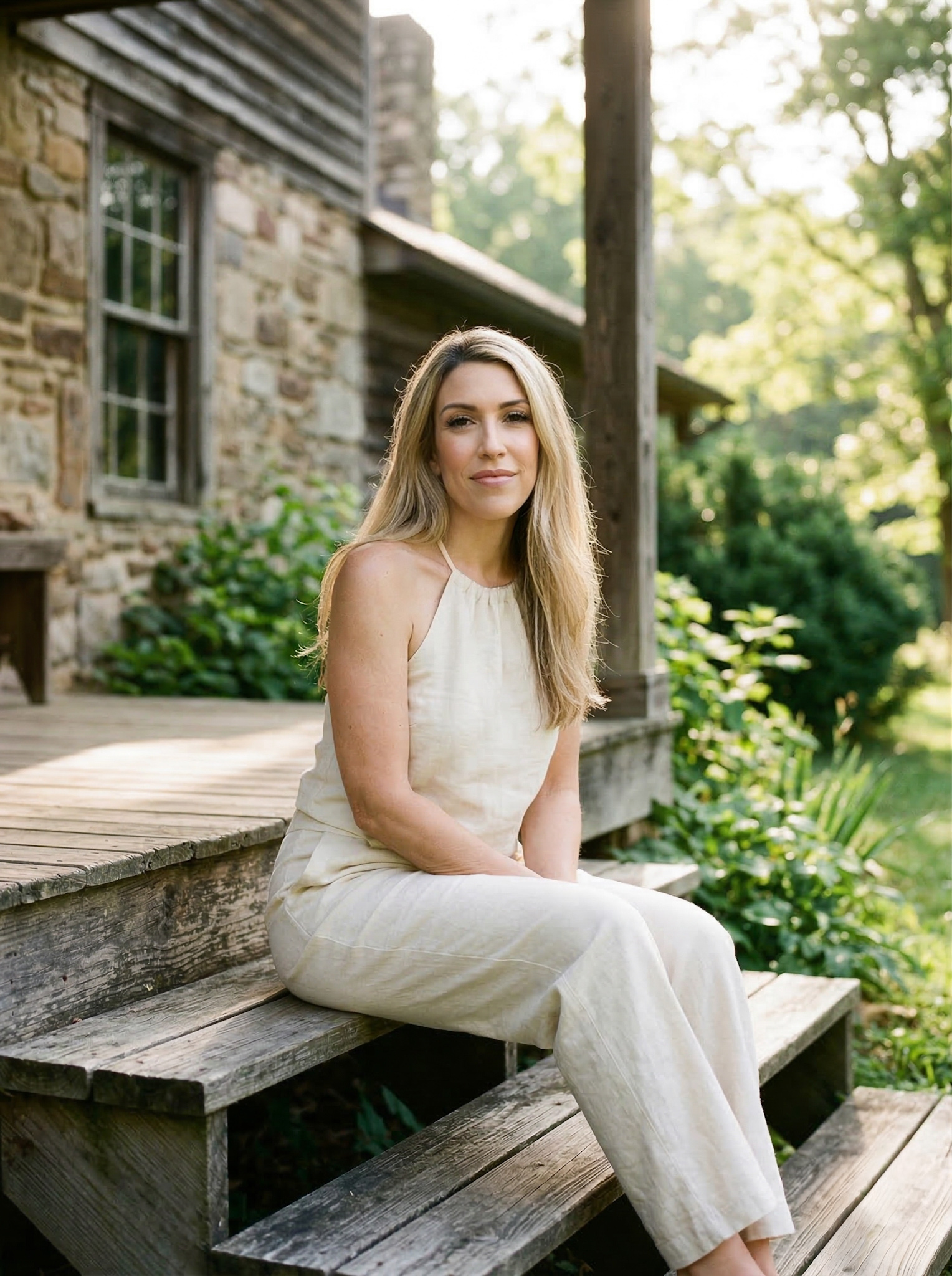
“The people who feel most at home in a new place are not necessarily the ones who found the best house. They’re the ones who did the inner work first.”
— Heather Brady, Founder of Curated Carolinas
Comparing Towns in the Carolina Foothills
The region I focus on — Western North Carolina and the South Carolina Upstate — contains a surprising range of character for a relatively compact geography. Within a two-hour radius, you can find a walkable city, a village with a serious arts program, a lake community with mountain backdrop, and remote land with no neighbors in sight. What follows is a ground-level read on each.
Tryon, NC
Tryon sits at around 1,000 feet in the Blue Ridge foothills — not quite mountain elevation, not quite piedmont. That geographic in-between describes the town’s character as well. About 1,700 people, a cultural calendar that punches well above its weight, an independent bookstore, and a global equestrian community built around Tryon International Equestrian Center. The winters are manageable. The landscape is dramatic. You’re 45 minutes from Asheville and 90 minutes from Charlotte, which means close enough to everything and far enough to think.
The right fit: Someone who wants genuine community, creative culture, and a pace that reflects a choice rather than a default.
Hendersonville, NC
Hendersonville is twenty minutes from Asheville but significantly quieter and more affordable. It has a real Main Street, accessible medical infrastructure, and the kind of regional airport access that makes it feel less remote than it might look on a map. The apple orchards, the flat valley floor, and the Blue Ridge Parkway nearby are genuine lifestyle assets. For people who are drawn to the Asheville energy but find the price and pace of Asheville proper to be a mismatch, Hendersonville often turns out to be the answer they didn’t know they were looking for.
Landrum, SC
Landrum sits just across the state line from Tryon — ten minutes from TIEC, twenty minutes from Spartanburg. It’s smaller and less known, which means the real estate still reflects that. The character is similar to Tryon: horses, arts, an independent bookstore, people who chose here with intention. South Carolina property taxes are a meaningful advantage. For buyers who want the foothills environment with slightly more elbow room and a different tax picture, Landrum is worth serious attention.
Lake Lure, NC
Lake Lure sits in a gorge carved by the Broad River, surrounded by state park land on three sides. The topography is more dramatic here than almost anywhere else in the region — Chimney Rock State Park is right there. It’s an intimate, destination-quality environment with a small permanent population and the kind of natural setting that stops conversation when people see it for the first time.
The lake is actively recovering from Hurricane Helene damage and is on track for a Memorial Weekend 2026 reopening. View available waterfront land in Lake Lure. The right fit: someone who wants water, privacy, and dramatic scenery — and who understands that the remoteness is part of what they’re buying.
Asheville, NC
Asheville is the regional anchor: a real city with a real arts scene, a restaurant culture that draws national attention, a creative economy, and a diversity of people and perspective that you don’t find everywhere in the South. It’s also the most expensive market in the region and the most congested.
If you’re drawn to Asheville, the honest question to ask is whether you need to be in Asheville — or whether something twenty or thirty minutes away gives you 80% of the experience at a meaningfully different price point and pace. For some people the answer is yes, it has to be Asheville. For many others, it turns out to be Hendersonville, or Black Mountain, or Weaverville.
Greenville, SC
Greenville is the surprise of the region. A genuinely walkable downtown, independent retail and restaurants, a world-class multi-use path system, and real estate that still looks like an opportunity compared to what you’d pay for the equivalent in Charlotte, Nashville, or Atlanta. The Dunean Mill District, the West End, the neighborhoods around North Main — these are places where people actually live and walk and put down roots.
Greenville draws people who could live in larger cities and chose not to. The result is a city with more texture than its size would suggest and a creative class that tends to be engaged and invested in where they live. For someone who wants urban-scale living with Southern pace and Southeast cost of living, Greenville is consistently underestimated.
The First Step in Relocating to the Carolinas
None of these towns is the right answer for everyone. That ’s the point. The right question isn’t which town is best — it’s which town is right for you, given the specific life you want to build.
The best first step is the same one I give everyone: start with the life question. What does your ideal day look like? What can’t you live without? What are you trying to leave behind? The towns take care of themselves after that.
The Carolinas — the foothills, the Blue Ridge, the Piedmont, the Upstate — contain more variety of place and pace than most people realize. The job of the relocation process, when it’s done well, is to find which part of that variety fits your life.
That’s what I do here. If you’re ready to start that conversation, I’d like to have it.
Heather Brady
Curated Carolinas